Healthcare in Phuket: Hospitals, Pharmacies, Insurance and Prices 2026
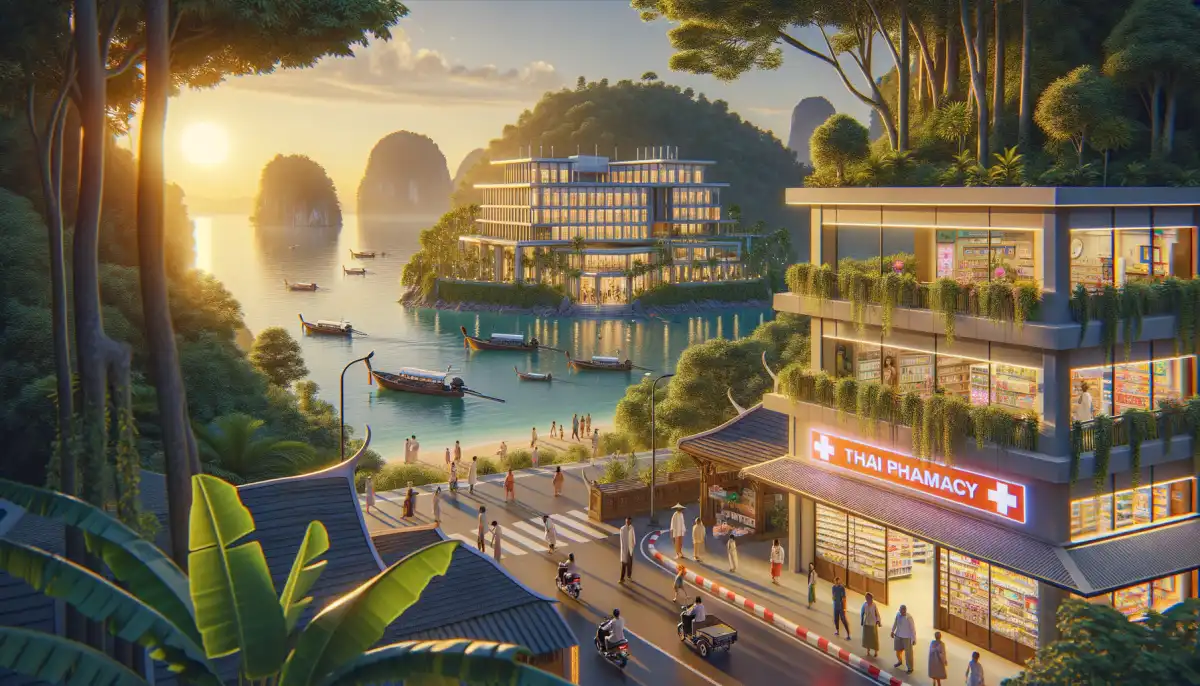
Healthcare in Thailand is among the best in Southeast Asia. Modern hospitals, English-speaking doctors, equipment on par with Europe. But here's the catch: without insurance, treatment can hit your wallet harder than you'd expect. I live in Phuket and over several years I've been to local hospitals both as a patient and accompanying friends. Here's what I've learned -- with prices and practical advice.
Phuket hospitals: where to go
Phuket has several major hospitals. Your choice depends on the situation: emergency care, a routine doctor visit, or a serious operation.
Bangkok Hospital Phuket
The main international hospital on the island. Located on Bypass Road in Phuket Town. Open 24/7 with an Emergency department. Doctors speak English, and Russian interpreters are available on request (not always). Top-notch equipment: MRI, CT scans, lab results in 1-2 hours.
The downside is the price. It's the most expensive hospital on the island. A general practitioner consultation costs 1,500-3,000 THB ($42-$84), a specialist 2,000-4,000 THB ($56-$112). But if you have insurance, go here -- most policies cover it.
Vachira Phuket Hospital
A government hospital in central Phuket Town. This is where locals get treated. Prices are 3-5 times lower than Bangkok Hospital: visits from 300-500 THB ($8-$14). But the queues are long (2-4 hours), staff don't always speak English, and conditions are more basic. Good for non-urgent cases on a tight budget.
Siriroj International Hospital
A private hospital near Phuket Town. Mid-range prices -- between Bangkok Hospital and Vachira. Good trauma department. Consultation is 1,000-2,000 THB ($28-$56). Open 24/7 with an Emergency department.
Mission Hospital Phuket
A private hospital run by a Christian mission. Clean, well-maintained, moderate prices. Good for routine check-ups and simple procedures. Consultation is 800-1,500 THB ($22-$42).
Dibuk Hospital and local clinics
Small clinics are found in every area. For simple issues (cold, cut, allergy), they're perfectly adequate. A visit costs 500-1,000 THB ($14-$28). Look for signs reading "Clinic" or "คลินิก" (pronounced "clinic").
Hospital comparison table
| Hospital | Type | Languages | Visit (THB) | Rating |
|---|---|---|---|---|
| Bangkok Hospital Phuket | Private international | EN, TH, RU (partial) | 1,500-4,000 | Top-tier |
| Vachira Hospital | Government | TH, EN (basic) | 300-500 | Average |
| Siriroj Hospital | Private | EN, TH | 1,000-2,000 | Good |
| Mission Hospital | Private | EN, TH | 800-1,500 | Good |
| Local clinics | Private | TH, EN (basic) | 500-1,000 | Basic |
Treatment costs without insurance
Here are real prices I've encountered personally or through friends. All prices are for private hospitals (Bangkok Hospital, Siriroj).
| Service | Price (THB) | Price (USD) |
|---|---|---|
| General practitioner visit | 1,000-3,000 | $28-$84 |
| X-ray | 2,000-5,000 | $56-$140 |
| MRI | 12,000-25,000 | $336-$700 |
| Blood test (general) | 1,000-3,000 | $28-$84 |
| Fracture treatment (no surgery) | 15,000-50,000 | $420-$1,400 |
| Fracture with surgery | 50,000-150,000 | $1,400-$4,200 |
| Hospitalization (per day) | 5,000-15,000 | $140-$420 |
| Ambulance (call-out) | 3,000-8,000 | $84-$224 |
As you can see, even a basic X-ray can cost 5,000 THB. And if, heaven forbid, you break something that needs surgery, the bill can easily exceed 100,000 THB ($2,800+). That's why insurance isn't optional -- it's essential.
Need help planning your trip?
Excursions, transfers, motorbike and car rental, real estate — we help with everything. Message us — reply in 5 minutes.
Message usPharmacies in Phuket
Pharmacies (ร้านขายยา -- "ran khai ya") are on every corner. The sign is usually green with a cross. Most are open 9:00-21:00; in tourist areas, until 23:00.
What you can buy without a prescription:
- Antibiotics (amoxicillin, azithromycin) -- 50-200 THB ($1.40-$6) per course. Yes, in Thailand antibiotics are sold over the counter. But self-medicating is a bad idea -- use them only if you know what you're doing.
- Painkillers (ibuprofen, paracetamol) -- 20-50 THB ($0.60-$1.40).
- Antihistamines (loratadine, cetirizine) -- 30-80 THB ($0.85-$2.25).
- Burn and bite ointments -- 50-150 THB ($1.40-$4.20).
- Anti-diarrhea medication -- 30-100 THB ($0.85-$2.80).
- Anti-malaria medication -- 100-300 THB ($2.80-$8.40). There's no malaria in Phuket, but useful if you're heading into mainland rural areas.
Tip: Bring any medications you take regularly from home. Thai equivalents exist, but the names are different and the pharmacist may not understand what you need. I always recommend having a list of your medications in English using international nonproprietary names (INN).
Dentistry
Dentistry in Phuket is a story on its own. The quality is excellent, and prices are 2-3 times lower than in the US or UK. Many people intentionally combine their vacation with dental work.
| Service | Price (THB) | Price (USD) |
|---|---|---|
| Cleaning (scaling) | 1,500-3,000 | $42-$84 |
| Filling (composite) | 1,500-5,000 | $42-$140 |
| Tooth extraction | 1,000-3,000 | $28-$84 |
| Crown (zirconia) | 10,000-25,000 | $280-$700 |
| Implant (with crown) | 35,000-65,000 | $980-$1,820 |
| Whitening | 5,000-15,000 | $140-$420 |
Good dental clinics in Phuket: Phuket Dental Studio, Sea Smile Dental Clinic, Phuket International Dental Center. All accept walk-ins, but it's better to book ahead through their website or Line.
Travel insurance for Thailand: how to choose
Insurance is the first thing you should arrange before your trip. Not a Thai visa, not a hotel -- insurance. Here's why: one day in the ICU at Bangkok Hospital costs 30,000-50,000 THB ($840-$1,400). Travel insurance for two weeks costs $20-$50. The math is simple.
What to look for:
- Coverage -- minimum $50,000. Better yet $100,000, especially if you plan an active vacation.
- Active sports -- scooter riding, diving, ziplining. Basic policies do NOT cover motorbike injuries! You need an "active sports" or "motorcycle" add-on.
- Deductible -- go without one if possible. Policies with a $50-$100 deductible are cheaper, but you'll pay for minor visits out of pocket.
- Dental -- usually only emergency care (acute pain) is covered, not planned treatment.
Popular international providers: World Nomads, SafetyWing, Allianz Travel, AXA. Compare plans on comparison sites, read the fine print about motorbike coverage, and make sure the policy includes direct billing at Bangkok Hospital Phuket.
Important: if you rent a scooter, make sure your insurance covers motorcycle accidents. Many policies exclude this, and scooter injuries are the number one reason tourists end up in the Emergency room.
Vaccinations before your trip
There are no mandatory vaccinations for a trip to Phuket. Thailand does not require a vaccination certificate on entry (except for yellow fever if you're coming from an endemic country).
Recommended vaccinations (optional):
- Hepatitis A and B -- transmitted through water and food. Risk in Phuket is minimal, but useful if you're traveling through rural mainland areas.
- Tetanus -- update if it's been more than 10 years.
- Rabies -- if you plan contact with animals. Stray dogs are common in Phuket, though they're usually not aggressive.
Get vaccinated 2-4 weeks before your trip. You can do it in Phuket too, but why spend your vacation on medical procedures.
Emergency services: how to call
Emergency number in Thailand: 1669 -- a free call; the operator speaks Thai and English. Response time in Phuket is 10-30 minutes depending on the area.
Alternatives:
- Tourist Police: 1155 -- they'll help with communication and coordination, and speak English.
- Bangkok Hospital Emergency: 076-254-425 -- if you need an ambulance from a specific hospital.
- Grab -- for non-emergencies, a taxi to the hospital is often faster and cheaper than an ambulance.
What to do if you have a scooter accident: Don't move the injured person (if a spinal injury is suspected), call 1669, photograph the scene and license plates. More about Phuket dangers and safety in a separate article.
Common tourist health issues
Living here for years, I've noticed that 90% of tourist hospital visits are for the same reasons:
- Sunburn -- number one. SPF 50 every 2 hours is not a suggestion, it's a rule.
- Food poisoning -- street food is safe if you eat at popular spots. Avoid pre-cut fruit sitting in the sun.
- Scooter injuries -- scrapes, cuts, fractures. Always wear a helmet.
- Heat stroke -- drink at least 2-3 liters of water per day.
- Jellyfish and sea urchin stings -- more common in low season. Vinegar for jellyfish, hot water for sea urchins.
- Monkey and dog bites -- don't feed or touch animals. If bitten, wash the wound and go to the hospital immediately for a rabies vaccine.
Most of these issues are covered in my article about 5 tourist mistakes in Phuket. Read it before your trip -- it'll save you money and stress.
Travel medical kit
Here's the minimum kit I recommend bringing with you:
- Your regular medications (with a +3 day buffer)
- Painkillers (ibuprofen / paracetamol)
- Antihistamines (for allergies and bites)
- Anti-diarrhea medicine (loperamide)
- Antiseptic and band-aids
- Electrolytes (rehydration powder)
- SPF 50+ sunscreen
Everything else can be bought at a Thai pharmacy for less than you'd pay back home.
Final thoughts
Healthcare in Phuket is high-quality but expensive without insurance. Get a policy with at least $50,000 coverage and an "active sports" add-on -- it'll cost $20-$50 and save you from potentially tens of thousands in expenses. You can visit the hospitals with confidence -- the equipment is modern and the doctors are qualified. For minor issues like a cold or a cut, a Thai pharmacy will do just fine.
Also make sure to check the current entry rules and Thailand visa requirements for 2026.