Phuket Dangers: What Actually Threatens Tourists & How to Stay Safe
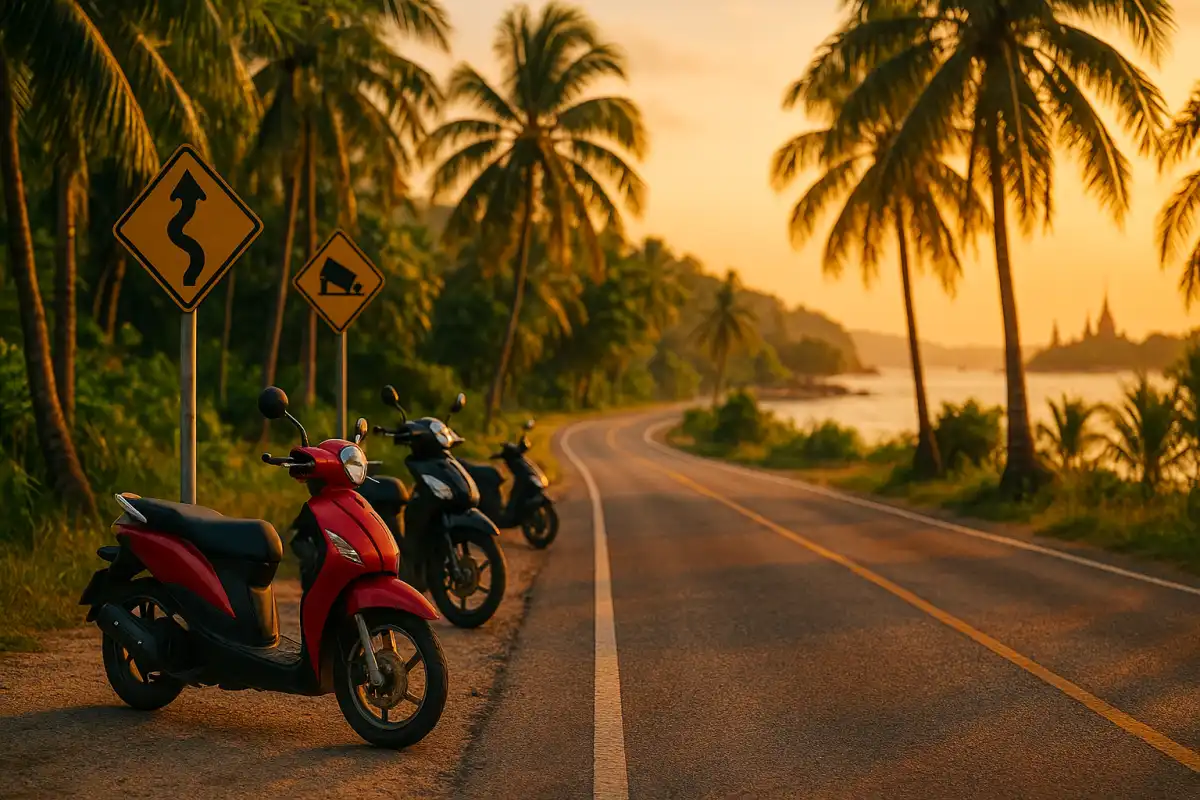
Phuket is much safer than the news headlines make it seem. Millions of tourists spend their holidays here every year without a single incident. But real risks do exist -- and after years of living on the island I've seen enough situations to put together an honest guide. No scare tactics for clicks here -- just real dangers ranked by frequency, and practical advice on how to avoid them.
1. Road traffic -- the #1 danger in Phuket
This is no exaggeration: roads are threat number one. Thailand consistently ranks in the global top 10 for traffic accidents per capita. In Phuket the situation is made worse by hilly terrain, narrow roads, and a huge number of inexperienced riders on rented motorbikes.
The numbers speak for themselves: according to local hospitals, there are 5-10 motorbike accidents daily in Phuket, at least one of which is serious. During high season the figures are even higher.
How to protect yourself:
- Always wear a helmet -- not a cheap plastic "bowl," but a proper full-face helmet. You can buy one for 800-1,500 THB at any shop
- Don't get on a motorbike without riding experience. Seriously. Phuket is not the place to learn
- Never ride after drinking -- not even after a single cocktail
- Be extra cautious on hills -- brakes on rental bikes are often in poor condition
- Use Grab or taxis after dark
I've written in detail about licenses and motorbike rental in the driving license section -- make sure to read it before getting behind the handlebars.
2. The ocean: rip currents and waves
The Andaman Sea is beautiful but treacherous. The main marine danger is rip currents -- powerful streams of water that pull you away from shore into open sea. Every year people drown in Phuket, and in 90% of cases the cause is rip currents.
It's especially dangerous during monsoon season (May-October) when waves on the west coast reach 2-3 meters. You can check the weather by month in a separate article.
Water safety rules:
- Red flag = swimming prohibited. Don't ignore it. Every season people die because they decided the flag was just a "suggestion"
- Yellow flag = swim with caution, strong waves
- If you get caught in a rip current -- do NOT swim directly toward shore. Swim parallel to the beach until you're out of the current, then head back
- Only swim at lifeguard-patrolled beaches
- Don't go into the water after drinking -- basic, but deadly
3. Scams and rip-offs
There are several classic tourist scams in Phuket. Knowing about them in advance makes them easy to avoid.
Jet-ski scam
The most notorious scheme. You rent a jet ski, bring it back -- and the owner suddenly "discovers" a scratch that wasn't there before. They demand 10,000-50,000 THB for repairs. The scratch was there before you, of course.
Protection: photograph or video the jet ski from all angles BEFORE renting. Or simply don't rent jet skis on the beach -- it's one of the classic tourist mistakes.
Currency exchange
Street money changers with rates "too good to be true" -- often with a catch. They may miscount bills, slip you fake baht, or use a rigged calculator.
Protection: only exchange money at official outlets (SuperRich, Value Plus) or withdraw cash from ATMs.
Fly-by-night tour agencies
Small "tour agencies" on the street sell excursions at 50% discounts. Sometimes everything goes fine; sometimes it doesn't: an old boat, a guide who doesn't speak English, a program cut in half, and no insurance.
Protection: book excursions through reputable companies or directly through us -- all options are described in our excursions guide.
Need help planning your trip?
Excursions, transfers, motorbike and car rental, real estate — we help with everything. Message us — reply in 5 minutes.
Message us4. Animals: from jellyfish to monkeys
Jellyfish (box jellyfish)
Box jellyfish are the most dangerous jellyfish in the tropics. Their stings cause extreme pain, and in rare cases anaphylactic shock. Jellyfish season runs from June to October, especially after rain.
What to do if stung: do NOT rub the skin and do NOT rinse with fresh water. Pour vinegar on the area (available at lifeguard stations), remove tentacles with a plastic card, and see a doctor.
Monkeys
Monkey Hill and several temples are home to colonies of macaques. They look cute but can be aggressive. They steal food, phones, sunglasses. They may bite if they feel threatened.
Rules: don't feed them, don't show food, don't make eye contact, don't smile (showing teeth = aggression). If a monkey bites you, wash the wound and go to a hospital for a rabies vaccination.
Stray dogs
There are thousands of stray dogs in Phuket. During the day they sleep and are harmless, but at night they can be territorial. Don't run from a dog -- it provokes a chase. Walk around them.
Snakes
They do exist but are rare -- mostly in the jungle and on the outskirts. Wear closed shoes when hiking, use a flashlight at night. If a snake bites you -- don't try to suck out the venom (that's a myth). Remember what the snake looked like and get to a hospital.
5. Sun and heat
Sounds trivial? Heatstroke sends more tourists to the hospital than all the scammers and jellyfish combined. Temperatures in Phuket sit at 30-35 C (86-95 F) with 80-90% humidity. If you've arrived from a cold climate, your body needs time to adjust.
| Problem | Symptoms | What to do |
|---|---|---|
| Sunburn | Skin redness, pain, blisters | Aloe vera, cool water, painkillers. SPF 50+ is a must |
| Heatstroke | Dizziness, nausea, confusion, hot dry skin | Get to shade, douse with water, call an ambulance. Life-threatening! |
| Dehydration | Dry mouth, dark urine, weakness, headache | Drink 2-3 liters of water daily, electrolytes (sold at 7-Eleven) |
Rules: SPF 50+ every 2 hours, wear a hat, don't walk in the heat from 11 AM to 3 PM during your first days, always carry a bottle of water.
6. Food: how not to get sick
Thai food is among the best in the world, but an unaccustomed stomach can rebel. It's not "food poisoning" in the classic sense -- more of your body reacting to new bacteria, spices, and oil levels.
Tips:
- For the first 2-3 days, eat in moderation -- don't dive into everything at once
- Street food is safe if the stall is popular (fast product turnover = fresh food)
- Avoid raw seafood at cheap places
- Only drink bottled water -- tap water is not safe to drink
- Keep activated charcoal and Imodium handy -- available at any pharmacy (30-80 THB)
7. Police and laws: what's off-limits
Thailand is not your home country -- the laws are different and punishments are harsher than you might expect.
Drugs. Zero tolerance. Marijuana was legalized in 2022 but re-restricted in 2025. Any other drugs carry criminal prosecution. Sentences range from 5 years to life.
Vapes and e-cigarettes. Formally banned in Thailand. Fine up to 30,000 THB, device confiscated. In practice police often look the other way, but at checkpoints you may get fined.
Drones. Flying a drone without NBTC registration -- fine up to 100,000 THB or up to 5 years in prison. Registration takes a few days and costs little, but few tourists know about it.
Insulting the monarchy. Article 112 of the Thai Criminal Code (lese-majeste) is one of the strictest in the world. Any disrespectful comment about the royal family can lead to up to 15 years in prison. Even as a joke -- even on social media.
Driving without a license. On-the-spot fine of 500 THB, but that's not the main problem. Without an international or Thai driving license, your insurance will NOT cover expenses in case of an accident. And hospital bills can run into hundreds of thousands of baht.
8. Insurance: which one to choose
Insurance is not optional -- it's a necessity. One day at Bangkok Hospital Phuket costs 15,000-50,000 THB ($420-$1,400). Surgery for a broken leg -- 200,000-500,000 THB ($5,600-$14,000).
What to look for when choosing insurance:
- Motorbike coverage. Many policies do NOT cover motorbike accidents. Check this specifically
- Coverage amount. Minimum $50,000 USD. Better -- $100,000 USD
- Emergency evacuation. Must be included
- Water sports coverage. If you plan to dive, snorkel, or jet ski
- Deductible. The lower the better. Some cheap policies have a $400 deductible -- that's pointless
Good options: World Nomads, SafetyWing, Allianz Travel. Cost for a decent 2-week policy is around $30-60 -- a negligible amount compared to potential expenses.
Summary: Phuket danger ranking
| Danger | Likelihood | Severity | Prevention |
|---|---|---|---|
| Motorbike accident | High | Critical | Helmet, experience, sobriety |
| Sunburn | High | Medium | SPF 50+, shade |
| Stomach upset | Medium | Mild | Gradual adjustment, hygiene |
| Scams | Medium | Medium | Awareness |
| Rip currents | Low | Critical | Flags, lifeguards |
| Jellyfish | Low | High | Seasonal awareness |
| Snakes | Very low | High | Closed shoes, flashlight |
As you can see, most dangers in Phuket are easily prevented with common sense and minimal preparation. Don't panic, don't be reckless -- and your holiday will be perfect. Phuket is a safe and welcoming island, as long as you approach it with respect.