Phuket Low Season 2026 — Is It Worth Going? The Full Truth
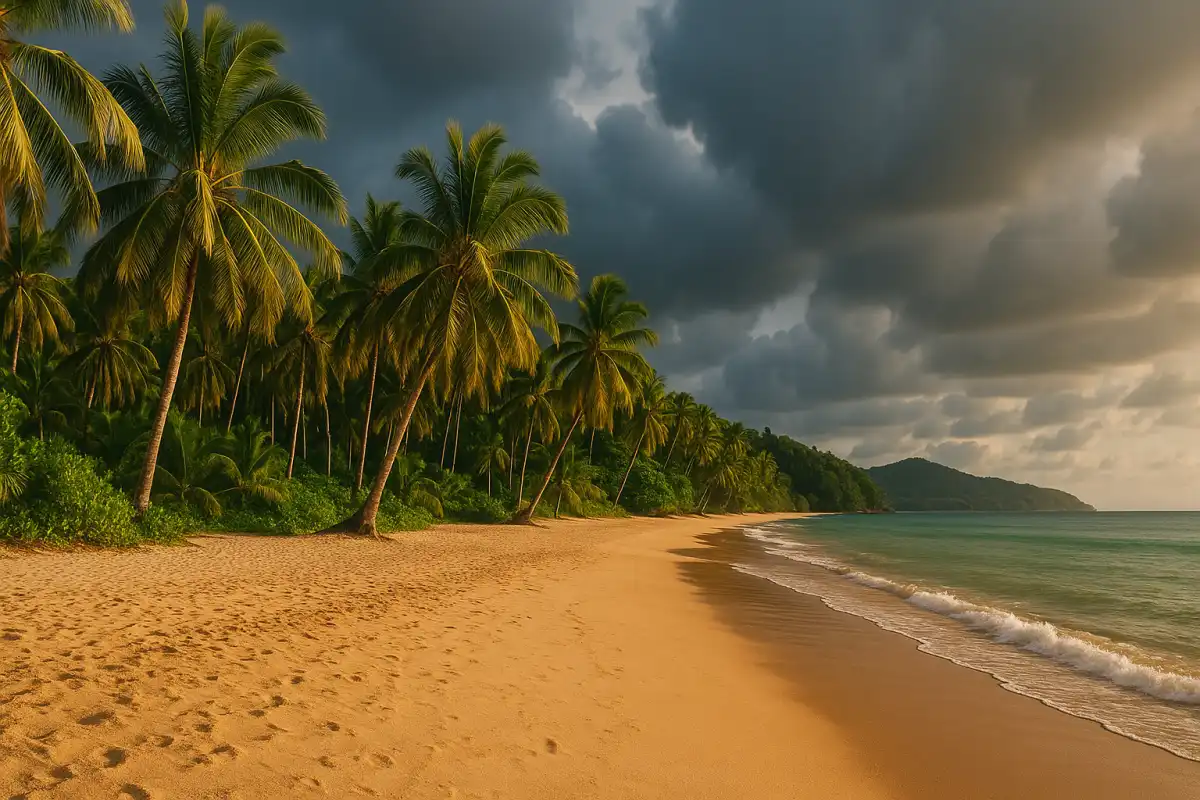
Hey there! I'm Vitaly, and I live in Phuket year-round — through both the high season and the low season. And I can honestly say: the low season in Phuket is not a disaster — it's actually one of the best times to visit, if you know the ins and outs. Let's bust some myths and look at the reality.
When is low season in Phuket
The low season (also called the rainy season or "green season") runs from May through October. The rainiest months are September and October. May and June are transitional — there's more rain, but far from every day. I've detailed the weather for each month in my article on Phuket weather by month.
High season is November through April, when there's almost no rain and December-January sees Phuket packed with tourists. Between the two, there's a huge difference in prices, crowd levels, and the overall vibe.
The biggest myth: "It rains non-stop"
This is the most common misconception. It does NOT rain all day during low season. Here's what a typical day looks like: sunny morning, clouds roll in around lunchtime, a powerful tropical downpour hits around 2-4 PM for 1-2 hours, and then the sun comes back out. Evenings are often completely clear.
There are fully sunny days too — even in September. And occasionally (rarely) it drizzles from morning to evening. But on average, you get 4-6 hours of sunshine per day even in the rainiest months.
The temperature doesn't drop either — still 28-32 degrees Celsius (82-90 F). The rain is warm, and many people (myself included) actually enjoy stepping out into it — after the heat, it feels amazing.
Prices: this is why it's worth going
The main advantage of the low season is prices. Here's the approximate savings compared to high season:
| Category | High season | Low season | Savings |
|---|---|---|---|
| 4-star hotel (per night) | 3,000-5,000 THB | 1,200-2,500 THB | 40-60% |
| Villa (per month) | 50,000-80,000 THB | 30,000-50,000 THB | 30-40% |
| Excursions | 2,000-4,000 THB | 1,500-2,800 THB | 20-30% |
| Motorbike rental (month) | 4,000-5,000 THB | 2,500-3,500 THB | 25-35% |
| Flights (from Europe/US) | from $600 | from $350 | 30-45% |
On a two-week holiday, a couple can easily save $800-$1,400 just from the seasonal price difference. And the quality of the vacation barely drops at all.
Need help planning your trip?
Excursions, transfers, motorbike and car rental, real estate — we help with everything. Message us — reply in 5 minutes.
Message usThe sea and beaches in low season
Let me be upfront here: the sea is rougher in low season. On the west coast (Patong, Karon, Kata, Surin, Bang Tao), the southwest monsoon kicks up waves. Red flags go up on popular beaches — swimming is prohibited.
But that doesn't mean there's nowhere to swim. Here's what works:
- East coast — Ao Po, Cape Panwa, beaches near Phuket Town. Calm seas, almost no waves.
- Nai Harn — on the southern tip of the island, often swimmable even in low season.
- Reef-protected beaches — waves are broken by coral reefs, making swimming safe.
- Hotel pools — in low season, 4-5 star hotels are dirt cheap, and they have amazing pools. Many people do exactly this: beach in the morning, pool in the afternoon.
For more on each beach and its characteristics, check out our article on the best beaches in Phuket.
Surfing — the best time of year
Ironically, for surfers the low season is the high season. From May to October, the west coast gets consistent 1-3 meter waves. Kata, Kalim, and Surin beaches become proper surf spots.
Surf schools run at full capacity. A beginner lesson costs from 1,500 THB for 2 hours with an instructor and board. Board rental is 300-500 THB/hour. If you've been wanting to try surfing, there's no better place or time.
What's open and what's closed
Here's where there is one notable downside.
Closed in low season:
- Similan Islands — closed from May 16 to October 14. This is the biggest loss — the Similans are truly spectacular. If they're a priority for you, plan your trip for high season.
- Some dive sites — rough seas make several west-coast dive spots inaccessible.
- Some beach clubs — Catch Beach Club and similar spots on Bang Tao may operate on a limited schedule.
Open as usual:
- Phi Phi Islands — open year-round, though trips may be canceled on the stormiest days
- All restaurants, cafes, malls — business as usual
- Temples, viewpoints, attractions — all open
- Massage, spas, gyms — no restrictions
- Patong nightlife — running, though with fewer people
Low season perks that nobody talks about
1. No crowds
Beaches are half-empty. Restaurants have no queues. Attractions are crowd-free. You get that "real Phuket" that tourists dream about. Avoid the common tourist mistakes and your trip will be perfect.
2. Nature at its peak
After the rains, the island turns incredibly green. Waterfalls fill up, the jungle blooms. Photographers love low season for the dramatic cloud-filled skies and stunning sunsets. High season with its scorched grass can't compete in terms of beauty.
3. Better service
When a hotel is at 30% occupancy instead of 95%, the staff gives you far more attention. Room upgrades, check-in bonuses, a personal touch — that's the reality of low season.
4. Authentic Thai atmosphere
Without millions of tourists, the island lives its own life. Local markets, temple festivals, street food — everything feels more vivid and authentic. Street food in low season is just as good — here's where to find it.
5. Sunsets
Paradoxically, the most beautiful sunsets in Phuket happen during low season. The clouds create incredible color gradients that you never see under clear skies. Promthep Cape, Cape Panwa, Nai Harn beach — my favorite sunset spots during this time.
Practical tips for a low season trip
- Bring a rain poncho or umbrella — not a jacket. The rain is warm but heavy. A lightweight poncho from 7-Eleven for 30 THB does the job.
- Schedule activities for the morning — rain usually hits in the afternoon.
- Book hotels with free cancellation — if the forecast shows persistent rain, you can rebook.
- Choose a hotel with a great pool — for when the sea is too rough.
- Don't be afraid of riding a motorbike in the rain — just wait out the downpour under a canopy. That's what the locals do.
- Mosquito repellent — there are more mosquitoes after rain than during high season.
So is it worth going?
My take: absolutely yes, as long as you're okay with a couple of hours of rain per day and aren't set on visiting the Similan Islands. Savings of 40-60% on accommodation, half-empty beaches, lush green nature, and an authentic Thai atmosphere — it's worth having a rain poncho in your backpack.
I especially recommend low season for anyone who's already been to Phuket in high season and wants to see the island through different eyes. Trust me, it's a completely different experience — and in many ways a deeper one.
And if you want to prepare for your trip in full detail, check out our weather section to pick the best month for your visit.