Street Food in Phuket: Where to Find It and What to Try
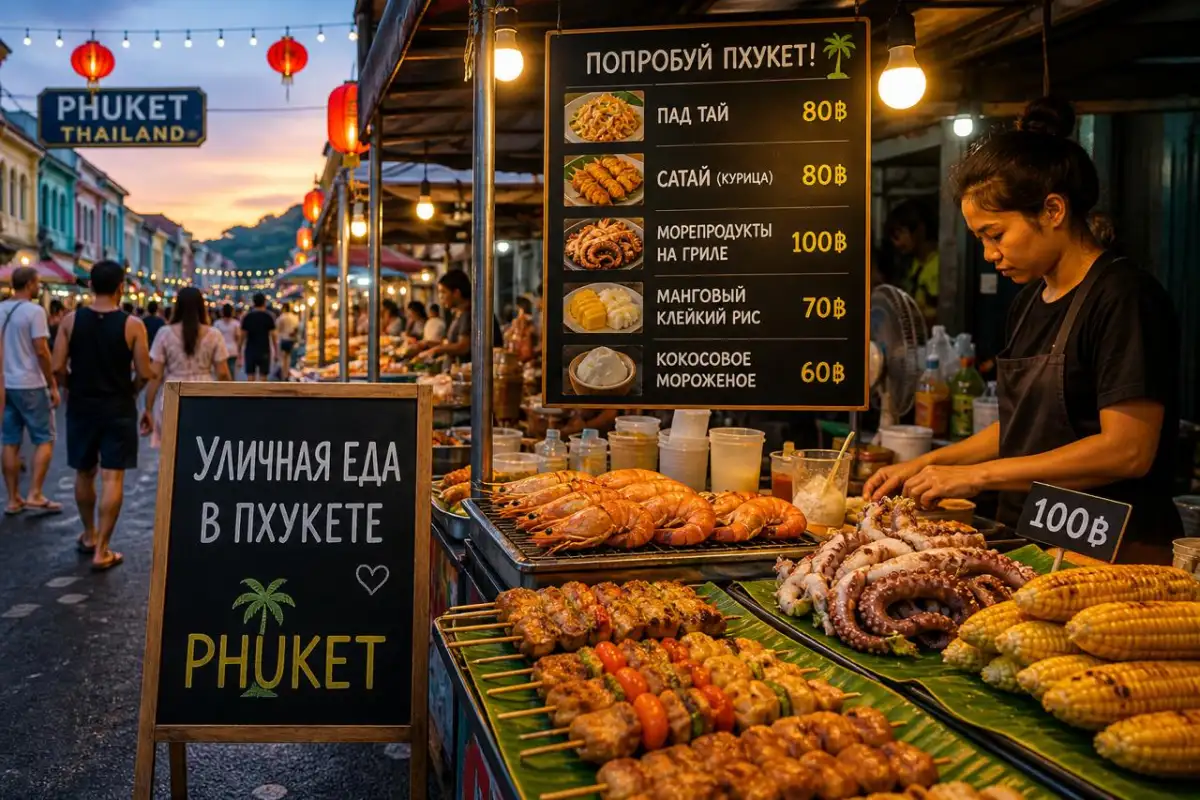
I've been living in Phuket for over four years, and I can confidently say: the true taste of the island reveals itself through street food. Forget air-conditioned restaurants — here, on the bustling streets and night markets, you'll find dishes that make Thailand the culinary capital of Asia. Over these years, I've visited dozens of markets, tried hundreds of dishes, and put together this complete guide for you: specific locations, prices, opening hours, and safety tips.
Best Spots for Street Food
Phuket Walking Street (Old Town)
This is the main culinary event of the week in Phuket. Every Sunday, Thalang Road in the Old Town closes to traffic and transforms into a massive market with over a hundred stalls. It runs from 4:00 PM to 10:00 PM. You can get there by taxi or motorbike — parking is available on nearby sois (side streets). From Patong, it's about a 40-minute drive; from Rawai, about 30 minutes.
This is my favorite spot, and I go almost every week. You can find everything here:
- Pad Thai (stir-fried noodles) — a perfect balance of sweet, sour, and spicy, 40-60 baht
- Som Tam (spicy green papaya salad) — for those who like it truly hot, 40-50 baht
- Satay (skewered meat with peanut sauce) — best enjoyed with a cold Chang beer, 10-15 baht per stick
- Mango sticky rice — the perfect dessert in the heat, 60-80 baht
I recommend arriving after 5:30 PM — by then all the stalls are set up, but the main crowd hasn't arrived yet. Closer to closing time, some vendors offer discounts, but the selection is already limited.
Chillva Market
Chillva Market is a market for locals, which means lower prices and a more authentic atmosphere. It's located on Yaowarat Road in Phuket Town, not far from Central Phuket. Open Tuesday through Saturday, from 5:00 PM to 11:00 PM. Easy to reach — it's near a major intersection, and parking is free.
I often stop by Chillva after running errands in town. It has an excellent selection of Thai desserts, fried chicken, and grilled seafood. There's live music on weekends and a section with vintage clothing. A serving of khao pad (fried rice) here costs 50-60 baht — cheaper than at tourist-oriented markets.
Naka Weekend Market
The largest market on Phuket. Open on Saturdays and Sundays, from 4:00 PM to 11:00 PM. Located on the southern outskirts of Phuket Town, near the Central Floresta shopping center. The parking lot is large, but during high season (November-March) it fills up fast — better to arrive early.
At Naka Weekend Market, you'll find dozens of food rows: from classic Thai dishes to grilled seafood and fresh fruit shakes. You can also buy souvenirs, clothing, and cosmetics. Prices are slightly higher than at Chillva, but the scale is completely different. I'd recommend going here if it's your first time in Phuket — you'll have enough impressions for the whole evening.
Beach Cafes in Patong
If you prefer watching your food being prepared right in front of you, head to Patong Beach in the morning. Fishermen are there, cooking freshly caught fish or grilled shrimp. Prices are higher than at the markets (from 150-200 baht per serving of seafood), but the quality is worth it. After lunch, you can check out the nightlife in Patong — everything is within walking distance.
Soi Phra Aphan and Rangsit
These narrow alleys in the center of Phuket Town are a haven for foodies. The same stalls have been operating here for years, and the owners treat their craft as an art form. Soi Rangsit specializes in: curry noodle soup and spicy seafood soup. They usually operate from 10:00 AM to 2:00 PM — these are strictly lunch-time food carts, not evening ones.
Top 10 Street Food Dishes with Prices
After four years in Phuket, I've compiled my personal ranking of must-try dishes. Prices are current as of 2026:
- Pad Thai (stir-fried noodles with shrimp or chicken) — 40-60 baht. A classic prepared everywhere, but the best I've had was at Walking Street.
- Som Tam (green papaya salad) — 40-50 baht. Ask for "nit noi pet" (just a little spicy) if you're not ready for Thai-level heat.
- Khao Pad (fried rice) — 50-60 baht. Simple, filling, and always delicious. Available with chicken, pork, shrimp, or crab (crab is pricier, from 80 baht).
- Mango Sticky Rice (mango with sticky rice and coconut milk) — 60-80 baht. The best dessert in the heat, especially during mango season (March-June).
- Roti with banana — 30-40 baht. A thin pancake with filling, drizzled with condensed milk or chocolate. Kids absolutely love it.
- Pad Krapow Moo Sap (minced pork with holy basil and chili) — 50-60 baht. Served with rice and a fried egg. This isn't just a dish — it's the soul of Thai cuisine.
- Satay (grilled skewers with peanut sauce) — 10-15 baht per stick, usually ordered in sets of 5-10. The perfect snack.
- Kaeng Som (sour curry with fish or shrimp) — 50-70 baht. For the adventurous: spicy, sour, and sweet all at once.
- Hoy Tod (crispy fried oyster omelet) — 60-80 baht. Crunchy on the outside, juicy on the inside. At the night market, this is usually the most popular stall — look for the queue.
- Fresh fruit shake — 30-50 baht. Mango, passion fruit, watermelon, coconut — take your pick. Freshly blended with ice, a lifesaver in Phuket's heat.
If you'd like to try Thai cuisine in a more comfortable setting, check out our review of the best restaurants in Phuket — there are options for every budget.
Need help planning your trip?
Message our bot — we'll find the right excursion, rental, or accommodation for your dates and budget. Free of charge, no prepayment required.
Message us on TelegramFood Carts vs Markets vs Food Courts: What to Choose
Newcomers often get confused: where should you go for street food? Let me break down the three main formats.
Food Carts (mobile stalls)
These are carts or motorcycles with built-in kitchens parked along the roadside. The cheapest prices (from 35 baht per dish), the most authentic food. The downside — no seating, and sometimes no English menu. Food carts mainly operate during the day, from 10:00 AM to 3:00 PM, and in the evening from 5:00 PM. Look for them on the sois (side streets) of Phuket Town and along Highway 402.
Night Markets
Walking Street, Chillva, Naka — these are large organized venues with dozens of stalls. Prices are slightly higher than food carts (by 10-20 baht), but you get tables, lighting, and a huge selection. The ideal format for your first introduction to Thai street food. They operate in the evening and at night.
Food Courts in Shopping Malls
Central Phuket, Jungceylon, Central Floresta — every major mall has a food court serving Thai food. Prices are comparable to markets (50-80 baht per dish), but you get air conditioning, clean restrooms, and card payment terminals. Open all day. Perfect for those who aren't quite ready for the full street-food immersion.
My advice: start with a food court or night market, get used to the flavors, and then move on to food carts — that's where you'll find the tastiest and cheapest dishes, prepared by the same Thai grandmothers who've been cooking for 20-30 years.
Safety Tips
One of the most common questions I get asked is: "Is it safe to eat street food in Thailand?" The answer is yes, as long as you follow a few simple rules.
- Cooked in front of you — safe. The main principle: if the dish is fried, boiled, or grilled right before your eyes — you're good. Heat treatment kills bacteria. Just avoid stalls where food has been sitting since morning without being reheated.
- Factory-made ice is safe. Cylindrical ice with a hole in the middle is produced in factories using purified water. It's used in all stalls and restaurants. Crushed ice from questionable sources is extremely rare — I haven't encountered it once in four years.
- Allergies — ask about peanuts. Thai cuisine heavily uses peanuts and peanut paste (satay, pad thai, som tam). If you have an allergy, learn the phrase "mai sai tua lisong" (no peanuts). Shrimp paste and fish sauce are also commonly used — check if you have a seafood intolerance.
- A queue is a good sign. If locals are lined up at a stall, it means the food is fresh and tasty. It's best to skip empty stalls.
- Take it easy with spice the first few days. Thais add chili generously. Your stomach needs 2-3 days to adjust. Start with milder dishes: khao pad, pad thai without chili, mango sticky rice.
- Water. Only drink bottled water. A 1.5-liter bottle costs 10-15 baht at any 7-Eleven.
Practical Tips
- Money: Always carry cash (Thai baht). Small stalls may not have card terminals. At larger markets, some vendors accept PromptPay (QR code), but cash is more reliable
- Spice level: Ask for "nit noi" (a little spicy) if you're unsure about your tolerance. Thai food is spicy by default
- Language: Learn a few words in Thai — "aroi" (delicious), "khop khun" (thank you), "thao rai" (how much). It will help you get a better dish and a smile from the cook
- Timing: The best time for street food is from 5:00 PM to 9:00 PM, when the freshest ingredients are available
- Transport: The easiest way to get to markets is by motorbike (rental from 200 baht/day) or Grab taxi. If you're planning trips around the island, check out our excursions — we offer culinary tours as well
Best Time for Street Food
Street food in Phuket is available year-round, but there are some nuances. During high season (November-March), markets operate at full capacity, there are more stalls, and the atmosphere is festive. In low season (May-October), some stalls close, but there are no crowds and prices are lower. Fruit season runs from March to June: mango, durian, mangosteen, and rambutan are dirt cheap and taste infinitely better.
I should also mention festivals. During the Vegetarian Festival (usually in October), Phuket Town turns into one enormous food market with hundreds of stalls serving unusual vegetarian versions of Thai dishes. It's a unique experience worth planning your trip around.
One Last Tip
Street food in Phuket is not just food — it's an experience of immersing yourself in real Thai life. Don't be afraid to get lost in the alleyways, try things you don't recognize, talk to the locals. That's exactly how I found my favorite stalls, where they already know my face and start cooking before I even order. And if you want to learn more about Phuket's nightlife — after a hearty dinner at the market, it's the perfect time.